

For years I slept with a regular bed pillow between my knees. It was the thing every article told you to do, so I did it, and I figured the fact that I kept waking up to fish it out from under the blankets was just part of the deal. Then this winter, after the two-day drive south with Ray, my lower back let me know it was done being patient. We left Michigan on a Tuesday morning in November with the SUV packed to the roof, and by the time we crossed into Georgia that evening I could feel the old familiar ache settling in right above my hip. The next morning, loading the car at the hotel, I could barely bend over to cinch the dog crates. That was the day I started looking at the Contour Legacy Knee Pillow. I had tried a rolled-up towel, a travel pillow, even a second bed pillow folded in half, and every one of them either slipped out by 2 a.m. or bunched up so high my hip felt worse. Looking back, I am a little embarrassed it took me that long to question the tool itself. I had spent 31 years telling patients that the right equipment matters, that a good chair and good posture are not the same thing as any chair and good intentions. Somewhere between the dental office and the Gulf coast, I forgot my own lesson. I finally understood the difference between a pillow that happens to be between your knees and one that was actually shaped to stay there.
Here is the short answer: the Contour Legacy Knee Pillow is better between the knees than a regular pillow for most side sleepers, especially anyone with lower back, hip, or knee complaints. It is not magic and it will not fix a back that needs a doctor's care, but it does the one job a regular pillow keeps failing at: it stays put, supports both legs at once, and keeps your hips from twisting while you sleep. I would not have believed a shaped piece of foam could matter that much, but after three months of using it every night, I am convinced the shape is the whole point. If you are happy with your regular pillow and wake up without back pain, you do not need this. If you are waking up stiff, read on.
| Contour Legacy Knee Pillow | Regular Pillow | |
|---|---|---|
| Shape | Shaped to support both legs and knees at once | Flat rectangle that squashes flat under your leg |
| Stays put overnight | Contoured shape and soft memory foam grip keep it between your knees | Slips out, bunches up, or ends up on the floor by morning |
| Hip and spine alignment | Keeps the top leg from dropping forward, so hips stay stacked | Thin and flat, so the top leg rolls forward and twists the hips |
| Temperature | Temperature-regulating foam pushes heat away from your body | Standard fill traps heat against your legs |
| Washability | Washable cover, easy to freshen up | Whole pillow is awkward to wash and slow to dry |
| Cost to try | Costs more than a pillow you already own | Costs nothing extra if you already have one in the house |
| Best for | Side sleepers with lower back, hip, or knee discomfort | Side sleepers with no complaints who sleep fine already |
Where the Contour Legacy Knee Pillow Wins
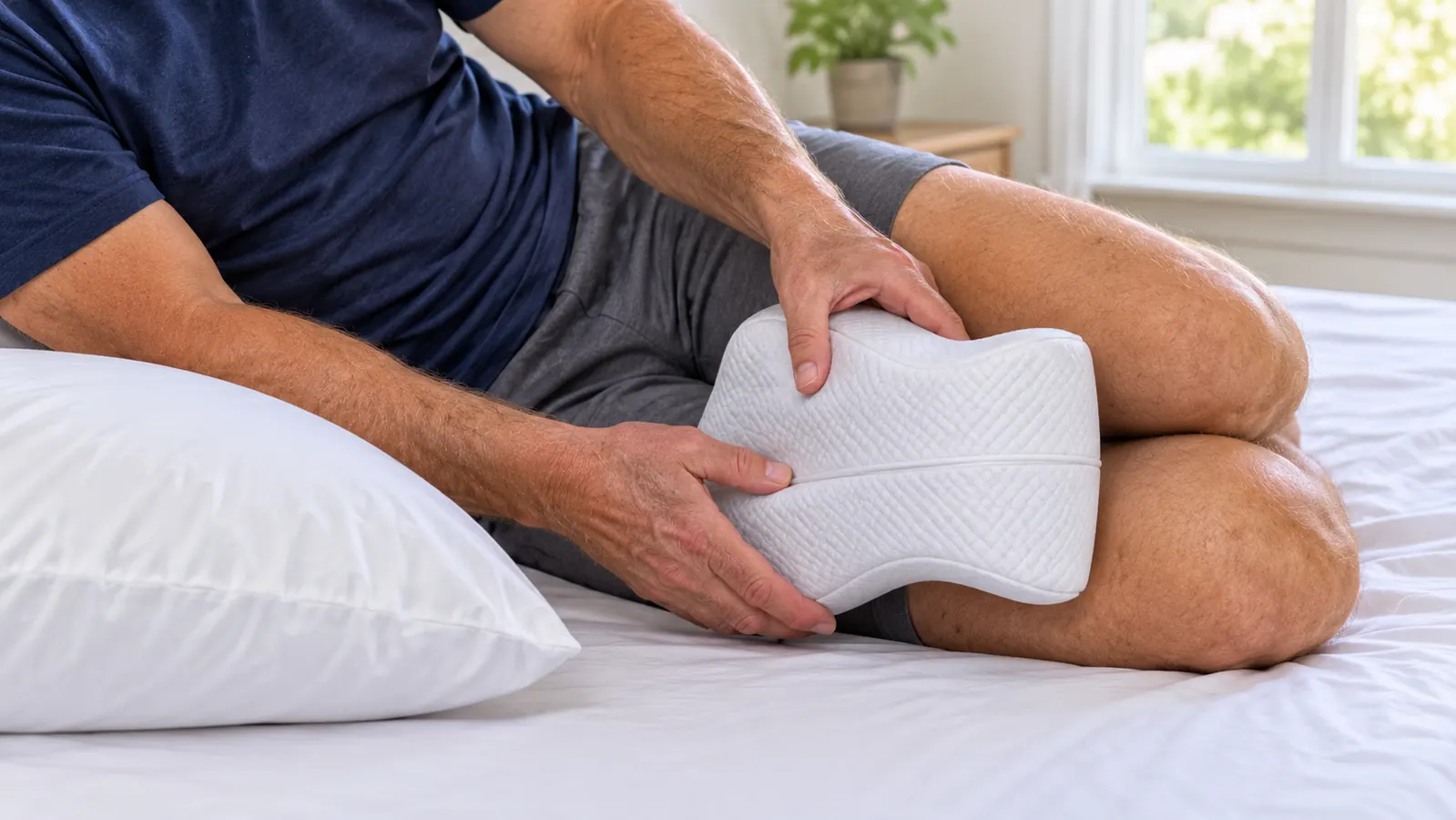
The first morning I used it, I woke up in the same position I fell asleep in. That had never happened with a regular pillow, not once in all the years I had been shoving one between my knees. The Contour Legacy Knee Pillow has a contoured shape that supports both legs at once, and the soft memory foam fill lets it mold around your knees instead of squashing flat. The item weighs about 198 grams, which is almost nothing, and measures roughly 10 inches by 9.5 inches, so it is small enough to travel. That matters to me because I pack it for the condo in Florida and the camper in summer. It is also soft, which I was skeptical about at first. I had assumed I wanted something firm, the way I like my mattress, but soft turns out to be the point: a soft pillow gives just enough to keep your knees comfortable while the shape does the alignment work. The cover is 62 percent polyester and 38 percent lyocell, which sounds like a fabric detail until you sleep on it and realize it does not cling or bunch against your pajamas. And it comes with a one year manufacturer warranty, which tells me the company expects it to hold up. I will also say the size took some getting used to. It is not a full pillow, and the first night I kept reaching for something bigger. But a pillow between your knees does not need to be big. It needs to be the right shape in the right spot, and once I stopped thinking of it as a pillow and started thinking of it as a positioning tool, everything clicked.
The other win is the washable cover. I am a retired dental hygienist, so I think about germs and laundry more than the average person. The cover comes off and goes in the wash, and that alone made the Contour worth it to me. A regular pillow between your knees collects skin oils and who knows what else, and washing a whole bed pillow is a production. You have to strip the case, wrestle the pillow into the machine, and then wait two days for it to dry. With the Contour, I toss the cover in with the sheets on Sunday and it is dry by the time the load finishes. The temperature-regulating foam is a quieter win, but a real one. I sleep warmer than Ray does, and I have not woken up with sweaty knees the way I did with a standard pillow, which used to wake me up enough to flip the pillow over and start the whole slipping cycle again. It pushes heat away from your body instead of trapping it, and on a warm Florida night in January that made the difference between staying asleep and kicking the blankets off at 3 a.m. The fabric also does not make that crinkly noise some pillow covers make when you turn over in the night. Ray sleeps through anything, but I am a light enough sleeper that a noisy pillow would have been a dealbreaker.
Where a Regular Pillow Wins
I am going to be honest, because that is the deal we have here. A regular pillow wins on cost, because you already own it. There is no version of this where spending money beats spending nothing, and I am not going to pretend otherwise. If you are a side sleeper with no back, hip, or knee complaints, there is no reason to buy anything. The Contour Legacy Knee Pillow is a solution to a problem, and if you do not have the problem, you do not need the solution. I also found that a regular pillow is easier to adjust in the moment. When I first got the Contour, I spent the first couple of nights fussing with it, trying to find the sweet spot, because a shaped pillow has a right way and a wrong way. A regular pillow you can shove anywhere, wad it up, fold it, hug it, and it will do whatever you ask. If you just want something to hold while you fall asleep and you do not care about alignment, a regular pillow is fine and familiar. Ray is proof. He sleeps on his back with a flat pillow and no complaints, and I would never suggest he switch. I will also say that a regular pillow is what I reach for on the couch. The Contour stays in the bed, where it belongs, and I have never once wished it were a couch pillow. That division of labor works fine.
A regular pillow also wins if you are someone who moves around a lot in bed and likes to sleep in different positions through the night. The Contour Legacy Knee Pillow is designed for side sleeping, and while I have used it happily in that position every night since the first week of December, I will be the first to admit it is not a back-sleeping pillow. One night in the camper, I propped it behind my lower back to read and it was the wrong shape for that job entirely. A regular pillow you can shove wherever you need it, under your head, behind your back, between your knees, and it will do a passable job at all of them. That is the honest tradeoff: the Contour does one job extremely well, and a regular pillow does a dozen jobs mediocrely. If you are a back sleeper who occasionally rolls to your side, a regular pillow is more versatile, and versatility counts for something when you are sharing a camper bunk with two small dogs who have opinions about pillow placement. And if you are a stomach sleeper, neither of these is really your answer. A pillow between the knees only does its job when you are on your side, and I would not want anyone to buy the Contour expecting it to fix a position that is not side sleeping in the first place.
The first morning I used it, I woke up in the same position I fell asleep in. That had never happened with a regular pillow.
The knee pillow that actually stays between your knees all night
If you are tired of waking up to a regular pillow on the floor and a stiff lower back, this is the one I reach for every night now. It supports both legs, stays put, and the cover washes right off.
Amazon Check Today's Price on Amazon →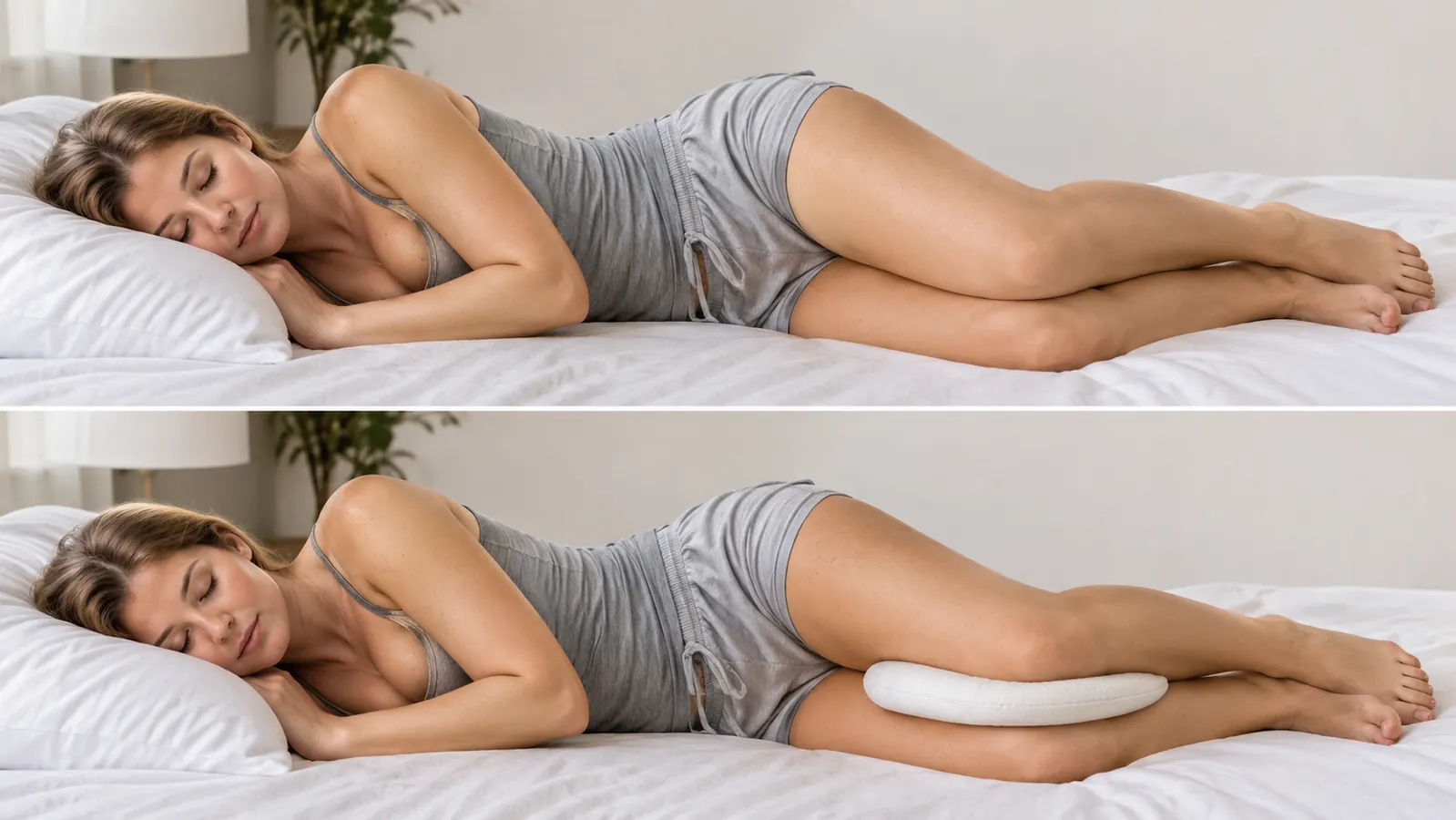
Who Should Buy Which
Buy the Contour Legacy Knee Pillow if you are a side sleeper who wakes up with lower back, hip, or knee stiffness, if your regular pillow ends up on the floor by morning, or if you have sciatica discomfort and your doctor or physical therapist has suggested keeping a pillow between your knees. That last one is exactly how I got here. My physical therapist told me years ago to put something between my knees at night, and I nodded along and used a bed pillow, because it never occurred to me that the pillow itself could be the weak link. It is also a good pick if you travel, because it is small and light enough to disappear into a suitcase. I packed it for the condo in Florida and it rode in the side pocket of my bag, and it was the first thing I unpacked when we got there. Ray teased me about it, and then he asked me to order him one for the camper after he spent a night in the bunk with a regular pillow and woke up with a stiff hip. If you are on the fence, here is how I would decide. Put your regular pillow between your knees tonight and see where it is at 3 a.m. If it is still there and you wake up comfortable, you are done, save your money. If it is on the floor and your hip is complaining, that is your answer.
Skip it and keep using a regular pillow if you sleep fine, if you are a strict back sleeper, or if you are hoping a pillow will fix a back problem that needs real medical attention. No pillow is a substitute for a doctor, a physical therapist, or the stretches they give you. I say this as someone who has tried a lot of gadgets over 31 years of leaning over a dental chair. I have owned lumbar rolls that migrated south by midnight, heating pads that needed an outlet, and a wedge that turned my bed into a ski slope. The Contour is the first one that did what it said and nothing more. It helped my sleep, and better sleep helped my back, but it did not cure anything. It just stopped making things worse every night, and after a few weeks I noticed I was reaching for my morning stretches less often and bending over to load the golf cart without the little pause I used to need. That is the honest review: it is a pillow, not a treatment. I will say one more thing, because it is the thing I wish someone had told me: give it a week. The first night felt strange, like sleeping with a small loaf of bread between my knees. By the third night I stopped noticing it was there, and by the end of the week I realized I had stopped reaching for the regular pillow entirely.
Give your lower back a fair chance at a good night's sleep
The Contour Legacy Knee Pillow is the one back gadget I kept using past the first week. If you side sleep and wake up stiff, it is worth trying. Talk to your doctor about real pain, and let the pillow handle the sleeping part.
Amazon Check Today's Price on Amazon →