
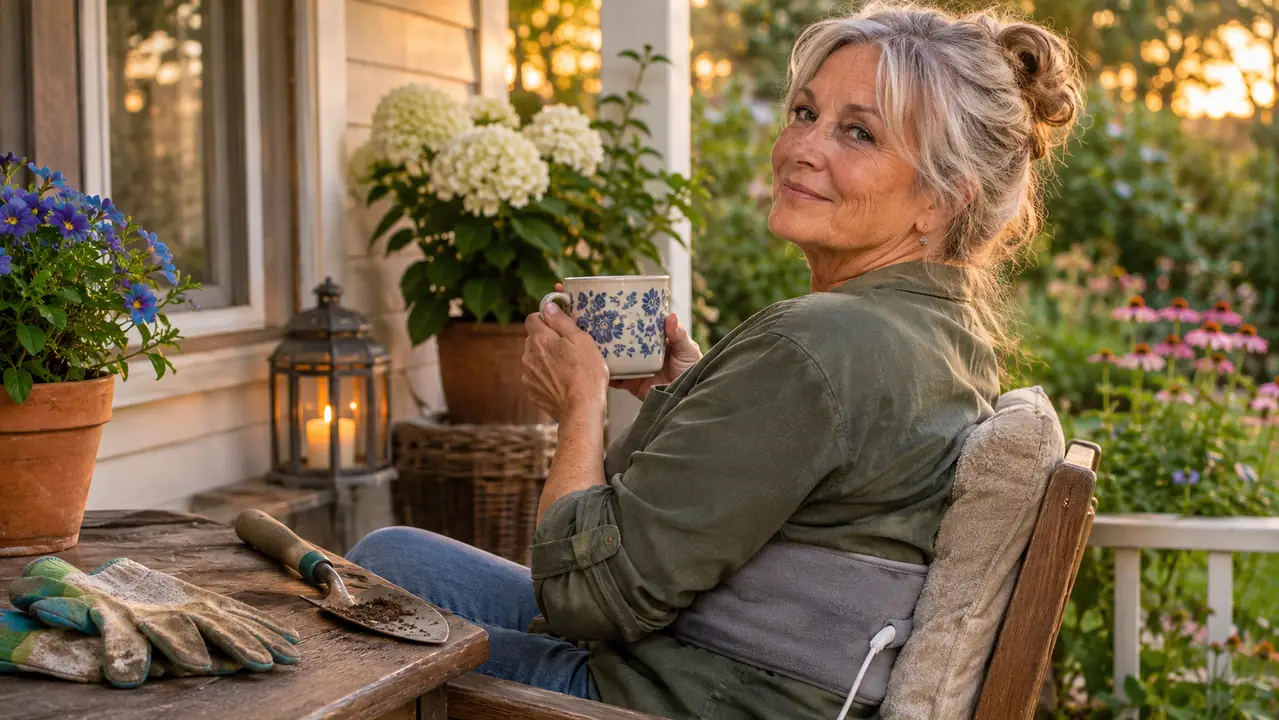
Somewhere around the third hour of weeding, my lower back starts sending me messages I should have listened to an hour earlier. I am 62, and I spent 31 years bent over a dental chair, so I know the bill for a long day in the garden always comes due around dinner time. By the time I stand up straight, brush the dirt off my knees, and walk the trowel back to the shed, I am already thinking about the GENIANI heating pad waiting on the back of the armchair. It has become the last step of every gardening day, and the first thing I pack for the drive south. I did not plan for it to become a routine. It just turned out that the days I used it, I slept better, and the days I skipped it, I woke up stiff and cranky. After a few weeks of that evidence, the routine stuck. Some evenings I only need ten minutes of heat. Some evenings I sit through the whole cycle and then have to remind myself to get up and make dinner. Either way, the pad is there, and that is more than I can say for the other gadgets in the hall closet.
Ray teases me that I have a whole routine for coming inside after gardening, and he is not wrong. The routine is simple: wash up, pour a glass of water, sit down, and let the pad work for twenty minutes while I do the stretches my physical therapist gave me. I am not a doctor, and I am not going to pretend to be one. I am just a retired hygienist with a stubborn lower back who has tried a lot of gadgets and kept only a few. This is how I unwind after a day in the garden, and I hope it gives you a few ideas for your own. Every back is different, and what works for mine might not work for yours. But the shape of the routine, the transition, the heat, the stillness, the stretch, is pretty universal. That is what I want to walk you through.
The heating pad that ends every gardening day for me
Three heat settings, moist or dry heat, and an auto shut off I can trust. It is the last step of my gardening routine, and it might be the missing last step in yours.
Amazon Check Today's Price on Amazon →Step 1: Take the ten minutes between the garden and the chair
The worst thing I ever did was go straight from weeding to the couch. Everything was still tight, my knees were still complaining, and I was still in gardening mode. Now I give myself ten minutes to make the switch. I take off my shoes, wash my hands, fill a glass of water, and change into something soft. It sounds small, but it tells my body the work is over.
I also make myself walk slowly instead of rushing. The physical therapist I saw a few years back told me that sudden changes, from digging to sitting, are what make a tired back complain the loudest. So I take the long way through the kitchen. I pat Biscuit on the head, check on Pepper, and let the house settle me down before I sit.
This is the step people skip, and I understand why. When the knees ache and the lower back is talking, the couch looks a lot more appealing than a sink full of soapy water. But I have learned that the ten minutes I spend making the switch save me an hour of stiffness later. The pad is the star of the routine, but the ten minutes before it matter just as much. Give yourself the transition, and the pad has an easier job to do.
Step 2: Pick your heat level before you sit down
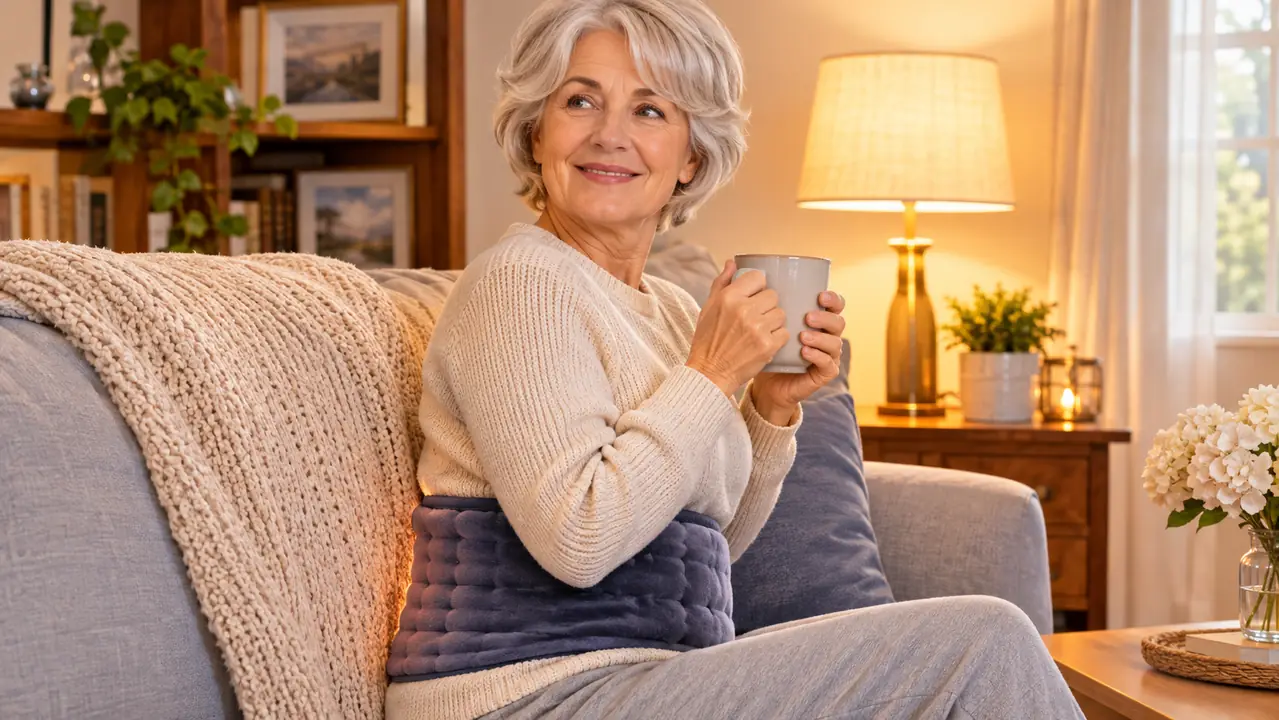
The GENIANI pad has three heat settings, low, medium, and high, and I almost always start on medium. On a cool Michigan evening after a light day of deadheading, low is plenty. After a long day of hauling pots or digging new beds, high feels better for the first ten minutes, and then I settle it down to medium. The pad delivers consistent warmth within minutes, so I do not have to guess or wait.
The other choice is dry heat versus moist heat. I use dry heat most days because it is simple and I can sit in my reading chair with the pad wrapped around my lower back. On days when my back feels especially tight, I switch to moist heat for deeper muscle soothing. The pad is designed for both, and choosing between them is part of how I listen to what my body needs.
If you are prone to dozing off with a heating pad, and I absolutely am, the auto shut off is the feature that makes me comfortable using this at all. I can relax without keeping one eye on the clock. That may not sound like much, but for someone who has fallen asleep mid-session more times than I can count, it is the difference between using a pad and owning one.
Step 3: Put the pad where the ache actually lives
The pad is 12 by 24 inches, which is not a full back pad and is not supposed to be. It is exactly the right size to wrap around the part of me that hurts. For me, that is my lower back, so I sit back against the chair and drape the pad across the small of my back, the long way, so it covers the widest part of the ache. The 12 by 24 size means it covers the spot without pooling in places I do not need it. I have used bigger pads, and they slide around. This one stays where I put it.
The listing says it wraps comfortably around the back, shoulders, neck, or legs, and I have used it in all four places. After a long day of driving south, I put it behind my neck. After a day of standing at the potting bench, I drape it over my shoulders. When Ray has a sore knee from the camper steps, he wraps it around his knee while he watches the news.
The trick is to let the pad follow the curve instead of forcing it. The microplush is soft and flexible, and the pad settles into place better when I lean back and let it find the spot. If it shifts, I adjust once and then leave it alone. Fidgeting with it the whole time defeats the purpose of sitting still. I have also learned to sit in a chair with arms, because the arms give the pad something to rest against. My reading chair works, the kitchen chair does not. Small detail, but it changed how often the pad stays put.
Step 4: Sit still long enough for the heat to do its work
This is the step I am worst at, and the one that makes the biggest difference. The pad reaches consistent warmth within minutes, but my back needs more than warmth. It needs me to stop moving. So I have a rule: twenty minutes in the chair, no phone in my hand, no list in my head. I put my feet up, close my eyes, and let the heat settle in. The first few times I tried this, I was up again in five minutes, convinced I had something more useful to do. I did not. I was just restless. Now I treat the twenty minutes like an appointment, and I keep it the way I would keep an appointment.
Somewhere in those twenty minutes I do the stretches my physical therapist gave me. Nothing dramatic, just a few slow turns and tilts, the ones that are supposed to keep my lower back from tightening up again. The heat makes the stretches easier, and the stretches make the heat more useful. They work together, and neither one does the job alone.
I also drink that glass of water I poured in Step 1. I am not going to lecture anyone about hydration, but I notice a real difference on the days I skip it. Gardening is thirsty work, and my back complains less when I remember to drink. By the time the pad shuts itself off, I am usually ready to get up and move again, which is exactly the point. If twenty minutes feels long, start with ten. The habit matters more than the timer. I started with ten minutes and one stretch, and it grew into a routine I actually look forward to.
Step 5: Fold it up so tomorrow is easy
When the twenty minutes are up, the pad has usually turned itself off, which I love. I give it a minute to cool, fold it once, and put it back on the arm of the chair where I will see it tomorrow. It is a small thing, but having it waiting for me is half the reason I actually use it instead of just owning it.
The pad is machine washable, which matters more than you would think for something that lives through gardening season. It sits on the arm of a chair, it gets draped over gardening clothes, and once in a while a dog decides it looks like a nap spot. The microplush stays soft, and the whole thing washes easily. I wash it every couple of weeks, and it comes out looking the same as the day it arrived.
It also travels. The recommended use on the listing says travel, and that is exactly where this pad earns its keep for us. The GENIANI pad packs flat in the suitcase for the two-day drive south, and on the first night in the Florida condo, after a long day of Ray driving and me sitting, it is the first thing I unpack. I keep a small hook in the closet for it, same as at home. Same chair, same routine, different view. That consistency is what makes the habit stick year round.
Why This Routine Works for Me
I have tried a lot of back gadgets over the years, and I have kept very few of them. What I like about this pad is that it does not ask anything of me. There is no setup to figure out and no learning curve. I sit down, I pick a heat level, I drape it where it hurts, and I stop thinking. For someone whose back has been a project for decades, that simplicity is the whole point. The controls are straightforward, the pad is soft against my skin, and the auto shut off means I never have to wonder whether I left it on. It is the rare gadget that makes my life simpler instead of busier.
The other thing I have learned is that warmth works best when I am not trying to do anything else. I used to think I could read a book with the pad on, and sometimes I can. But the days it helps the most are the days I sit with the heat and let my back unclench on its own schedule. That is not very productive, and I am fine with that. Unwinding is supposed to be unproductive. It is the one part of my day with no goal attached, and my back seems to know the difference. Ray has his own version of this with the newspaper, and we sit in the same room without saying much. It is quiet, and I have learned to stop apologizing for the quiet.
I also think the size is part of why I reach for it. A full back pad feels like a production, something to haul out and fold up and store. This one stays on the arm of my chair, small enough to live out in the open. Out of sight really does mean out of mind for me, so I keep it visible. That one decision, just leaving it where I can see it, is probably why I use it almost every day. It takes up less room than a throw pillow, and it travels well enough to come south with us every winter. A gadget only works if you actually use it, and this one makes that part easy.
What Else Helps
None of this is medical advice, and I want to be clear about that. If your pain is new, sharp, spreading, or comes with numbness, talk to your doctor or a physical therapist. For me, the pad is one piece of a bigger routine. I do the stretches I was given. I try to sleep on a mattress that does not fight my back. I take Biscuit and Pepper for a short walk most days, even in Florida, when the Gulf breeze is doing most of the work. I also keep a folding stool in the garden so I am not kneeling on the ground for an hour at a time. Little changes like that add up faster than any single gadget.
The heating pad is the comfortable part of the routine, the part I look forward to. It is not a substitute for the rest of it. I also learned to say no to one more bed to weed, one more pot to move, one more project that starts with the phrase "while I am out here anyway." Gardening is supposed to be good for me, and it is, as long as I remember that the point is to enjoy it, not to finish it.
The pad reaches consistent warmth within minutes, but my back needs more than warmth. It needs me to stop moving.
If you garden the way I do, your back already knows this story
The GENIANI pad is the last step of my gardening day and the first thing I pack for the drive south. Three heat settings, moist or dry heat, machine washable, and an auto shut off that does the worrying for me.
Amazon Check Today's Price on Amazon →