
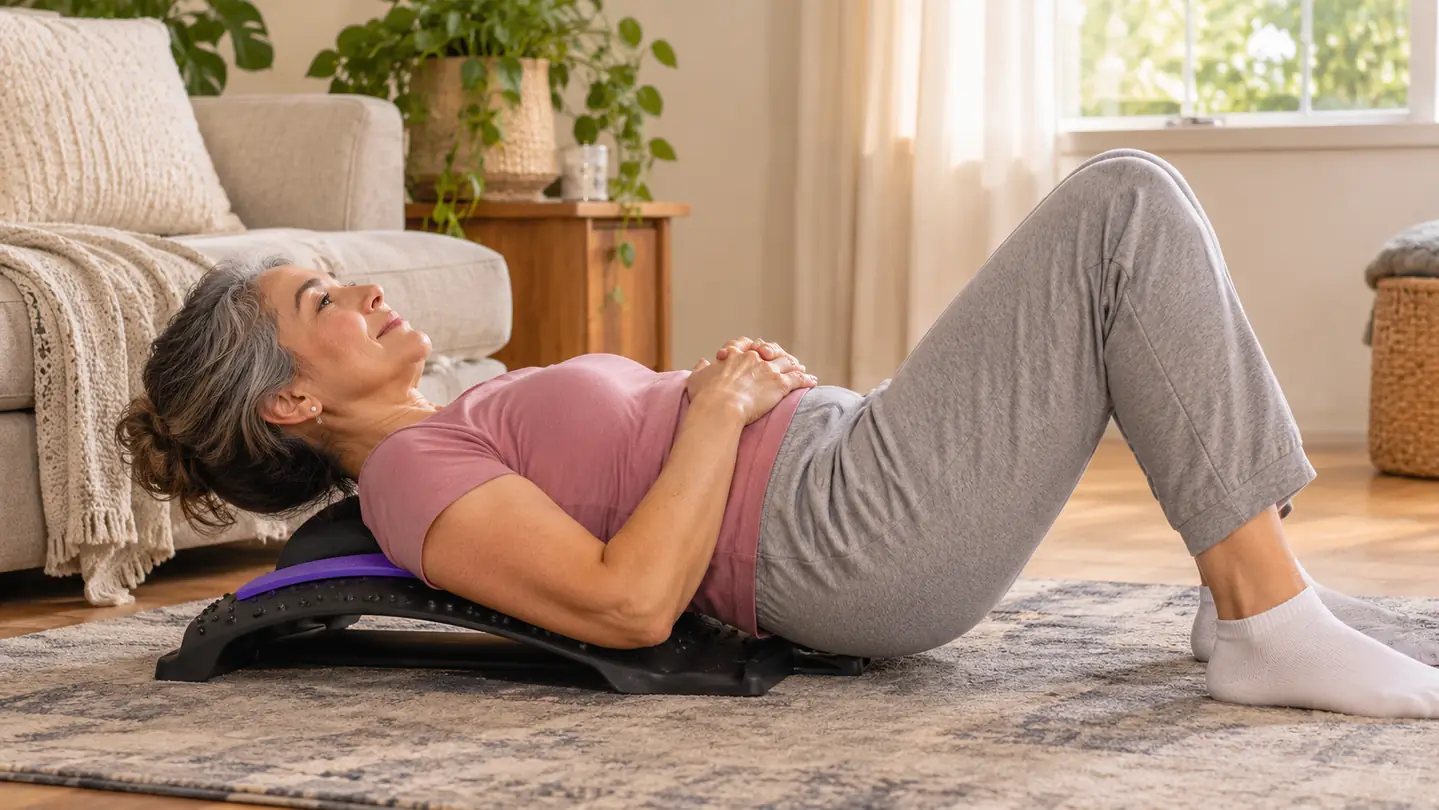
I will be honest with you. After 31 years bent over a dental chair, my lower back has opinions about everything. Long car rides, gardening, a mattress that is past its prime, even a full day of walking on the beach. My name is Joan, I am 62, and I have tried enough back gadgets to fill a garage sale. Most of them sit in a closet. So when I say I kept the MINOLL back stretcher out where I can see it every morning, that means something.
This is not a cure and it is not a medical treatment. It is a curved board with three angles, and I used it daily for weeks. Here is exactly what that was like, what it did for my back, and who I would not recommend it to.
The Quick Verdict
A simple, well-made stretching board that gave my lower back real relief when I used it daily. Not a fix for serious back problems, but a solid daily habit for a plain old achy back.
Amazon Check Today's Price →The back stretcher I actually kept using after week one
I have tested enough back gadgets to fill a garage sale. This is the one that stayed out on the floor. Check today's price on Amazon and see if it fits your routine.
Amazon Check Today's Price on Amazon →How I've Used It
The MINOLL back stretcher is a 15.16 x 9.84 inch board made of acrylonitrile butadiene styrene, which is a fancy way of saying sturdy plastic that does not flex when you lean back on it. It weighs 13.76 ounces, so it is light enough for me to carry from the living room to the camper without asking Ray for help. That matters more than you might think.
The board has three angles: 15 degrees, 28 degrees, and 42 degrees. I started at 15 degrees for the first week. The first morning I tried it, I made a beginner's mistake. I unpacked the box in the kitchen and lay down on the bare tile. Ten seconds in, I knew that was wrong. The floor pressed straight through the board and I could feel every seam in the grout. I moved to the living room rug and it was a different experience entirely. The stretch went where it was supposed to go, into the curve of my lower back, instead of bouncing off the hard floor.
I kept my knees bent and my feet flat, the way my physical therapist taught me for every back stretch. With my legs straight, the pull wandered into my hamstrings. With knees bent, it stayed exactly where I wanted it. Two minutes felt like plenty at first. By the end of the first week I could do five minutes without rushing to get up. On day three I almost gave up. My back was sore from a morning of deadheading the garden, and 15 degrees felt like nothing at all. I told Ray this was money wasted. He reminded me that I say that about every new gadget, so I agreed to give it a full week before deciding.
After about ten days I moved up to 28 degrees on a Tuesday morning. The first session at the new angle was noticeably stronger, so I cut back to three minutes for a few days before working up to five. That is where I have stayed. The 42 degree setting felt like too much for my everyday achy back, and I did not see a reason to push it. The stretcher is rated to hold up to 400 pounds, which was never a concern for me, but it tells you the board is not going to give out under normal use.
My routine became simple: coffee, let the dogs out, then five minutes on the board before I did anything else. Some days I used it again before bed, especially after a long drive or a day of gardening. The product is listed for back pain relief, posture correction, sciatica, scoliosis, and herniated disc concerns. I cannot speak to all of those. I can only tell you what it did for my plain old achy lower back.
What the MINOLL Back Stretcher Actually Does
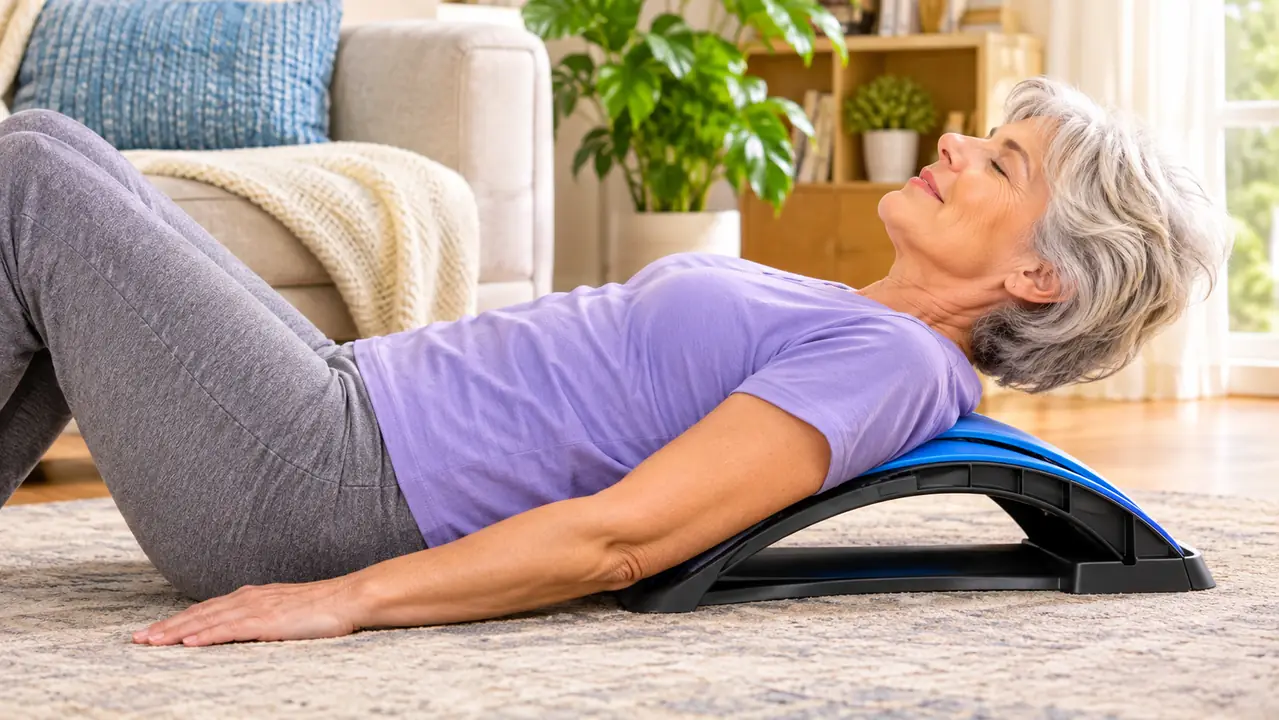
Here is what surprised me. The MINOLL back stretcher does not crack your back the way a chiropractor might. It is not a back cracking device in the dramatic sense. It is a gentle arch that lets your spine decompress while you lie still. You are not twisting or popping anything. You are just giving your lower back a few minutes of the opposite position from the one it sits in all day.
Before this one, my routine was a rolled-up bath towel under my back, the trick my physical therapist showed me years ago. It worked, sort of. But the towel bunched up and shifted, and I spent more time adjusting it than relaxing. I also tried a foam roller, which was too aggressive for my lower back, and a yoga mat on its own, which did nothing at all. The MINOLL sits between those two. It is firmer than a towel and gentler than a roller, and because it does not move, I do not have to think about it.
The ergonomic design increases the contact area with your back, which spreads the stretch across a wider surface instead of focusing all the pressure on one spot. That is why it felt gentler than I expected. The first time I used it, I thought it would feel like lying on a log. It did not. It felt like a firm, even support under the curve of my lower back. I counted slow breaths, ten of them, and by the time I got up my back felt longer, if that makes sense. Not fixed, just less tight.
I also appreciated that the angle is adjustable. The three settings meant I could start small and work up gradually. I tried 42 degrees exactly once, on a morning after a bad night's sleep on a hotel mattress. It was too much. My back arched higher than it wanted to, and I felt it in my ribs. I went back to 28 degrees and stayed there. That is not a criticism of the board. It is proof that the three angles genuinely do different things, and that the gentle setting is not just marketing.
The MINOLL did not fix my back. It gave me five minutes of genuine relief every single day, and after weeks of that, I stopped dreading the mornings.
How It Held Up Over Weeks of Daily Use
I have owned back stretchers that started squeaking after a week, and others that developed a rough edge where the plastic was molded. The MINOLL has been through weeks of daily use, two long car trips, and a stint in the camper, and it still looks and feels the same as the day it arrived. No squeaks, no flexing, no wear that I can see. There are no hinges and no moving parts to fail, which is exactly why I keep coming back to it. It is one solid piece, and one solid piece is hard to break.
The dogs have opinions about it, of course. Biscuit sat on the edge of it once while I was folding laundry, and Pepper gives it a sniff every time it comes out of the camper. It wipes clean with a damp cloth and a little dish soap, which matters in a house with two small rescue dogs who like to put their noses everywhere. There is no fabric cover to wash and no foam that holds a smell. That is the extent of the maintenance.
About three weeks in, Ray set a heavy duffel bag down on top of it in the back of the SUV. I winced, expecting a crack. When I pulled it out that night at the hotel, it was fine. No flex, no mark, no complaint. The 400 pound rating is about a person lying on it, not a duffel bag, but it tells you the plastic is not the cheap kind.
One thing I will say honestly: the board is not padded. If you are lying on a hard floor, you will feel the floor through the board. I always use it on the rug in the living room or on the carpet in the camper, and that is comfortable enough. On a bare floor I would want a mat under it, or a folded towel.
The winter condo has tile in the kitchen and a thin rug in the living room, so I learned to keep a folded bath towel with the board. Towel under the board, five minutes on the rug, same stretch. It is a small thing, but it means I use it in Florida exactly the way I use it in Michigan.
The Two-Day Drive Test
The real test came on our drive south. Ray and I leave western Michigan in late fall and drive two days to our winter condo on the Gulf coast of Florida. This year we stopped the first night somewhere around the Tennessee line, which makes for a long first day in the car. My back is always at its worst after sitting for hours with my knees at a bad angle. Ray does most of the driving, and I sit in the passenger seat with a small pillow behind my back, the usual trick. It only helps so much.
The first night I made a mistake. I told myself I was too tired to bother with the board, that I would just sleep it off. I woke up the next morning stiff as a board, and the first hour of driving was miserable. That was the lesson. It is not the drive that does the damage. It is the night after the drive, when your back tightens up while you sleep.
The second night I did five minutes at 28 degrees before bed, on the hotel carpet with a folded towel under the board, because hotel carpet is thin. The difference was noticeable. The next morning I got out of the car without the usual wince. That has never happened before. I am not saying the board fixed anything permanently. I am saying that five minutes of stretching before bed made the second day of driving noticeably more comfortable.
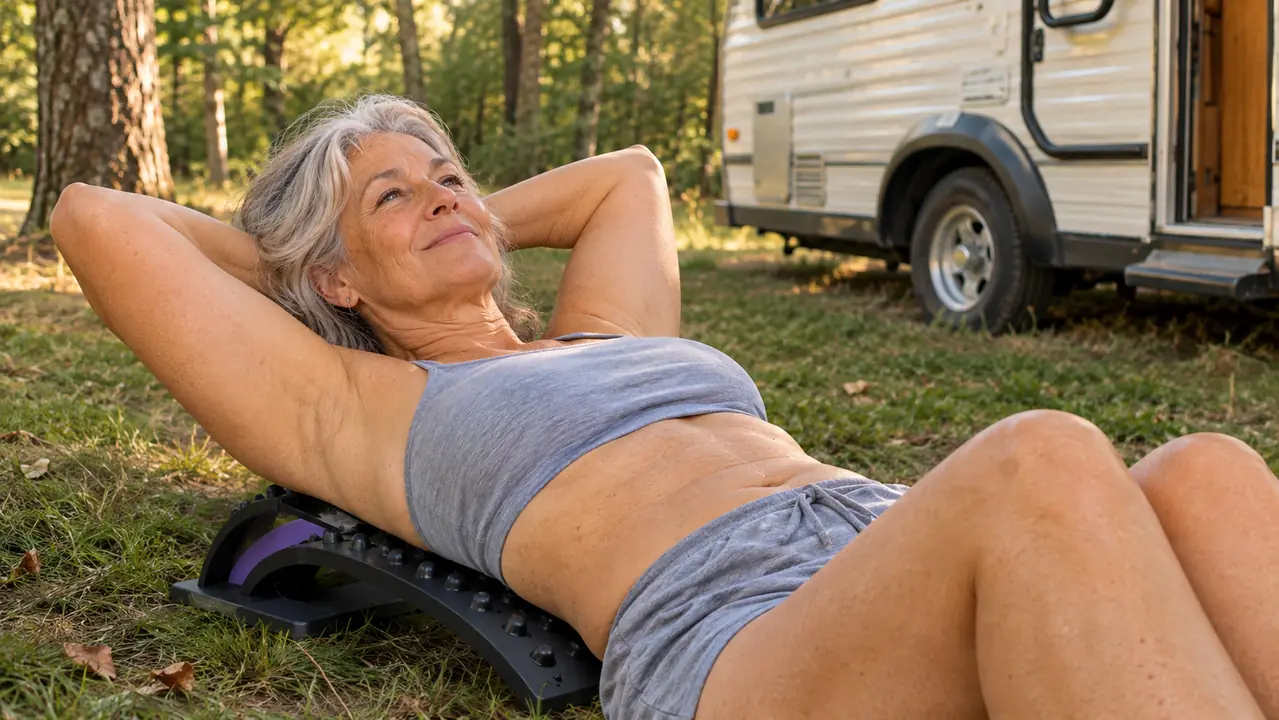
It also came along in the camper this summer. It takes up almost no room, which is the whole point of something that weighs less than a pound. I used it on the camper's carpeted floor in the mornings, and it gave me the same gentle stretch I get at home. The camper carpet is thicker than the hotel carpet, so I did not even need the towel.
I used it the same way on the drive north in the spring, and it behaved the same. By now the routine is automatic: hotel room, towel on the carpet, board on the towel, five minutes, lights out.
What I Liked
- Three adjustable angles let you start gentle and progress slowly
- Lightweight at 13.76 ounces and easy to pack for travel
- Sturdy construction rated to hold up to 400 pounds
- Ergonomic design spreads the stretch across a wider contact area
- Simple to use, no instructions needed, no assembly
Where It Falls Short
- Not padded, so you need a rug or mat under it on hard floors
- The highest angle felt too aggressive for my everyday achy back
- It is a stretch, not a treatment, so it will not fix serious back problems
Who This Is For
This is for people with a plain old achy lower back who want a simple daily habit. If you sit at a desk all day, drive long distances, garden, or spend your life bent over like I did, the MINOLL back stretcher gives you a few minutes of gentle decompression that fits into a morning routine. It is also for travelers. At 13.76 ounces, it disappears into a suitcase or the back of an SUV, and having it in a hotel room after a long drive is genuinely helpful.
It is also for people who, like me, do not want another complicated gadget. There are no straps, no timers, no batteries, nothing to figure out. You lie down, pick an angle, and breathe. That simplicity is exactly why I kept using it.
Who Should Skip It
If you have a serious back condition, a recent injury, or pain that is new, sharp, spreading, or comes with numbness, do not buy this based on my review. Talk to your doctor or physical therapist first. The MINOLL is a stretching tool, not a medical device, and it will not fix a herniated disc or sciatica on its own. The product listing mentions those conditions, but I am not a doctor and I would never tell you to treat something serious with a piece of curved plastic.
I would also skip it if you are looking for a dramatic crack or an intense stretch. This is gentle. The 42 degree setting is the most intense, and even that is a sustained stretch rather than a release. If you want a deep, aggressive back crack, this is not the tool for you. And if you are not willing to use it daily, save your money. Like any stretch, it works when you do it, and it does not build up a lasting effect if you leave it in the closet.
Five minutes a day is all it takes
I have tried the gadgets that promised the world and the ones that just take up space. The MINOLL back stretcher is the one I kept using. See today's price on Amazon and decide if it belongs in your routine.
Amazon Check Today's Price on Amazon →